
Most "best AI tools" listicles are written for affiliate clicks, not for traders who actually need conviction. If you're comparing options this year, look past hypey scores and slick dashboards. Focus on two things: quality of predictions and clarity about why those predictions were made.
Below is a buyer's guide that puts explainability, factor breadth, and fit for your workflow front and center - and shows where MarketCrunch AI distinguishes itself.
What "Best" Should Mean in 2025
Before the logos blur together, set your criteria:
- Backtesting: If you see "signal" on the internet, shout "backtest". This is a standard way to validate how good a predictive signal is if you were to go back in time and test it. We compare our signal vs. buy-and-hold, and clearly compare returns as well as Sharpe ratio.

- Predictions: The signal itself. Do you get actionable horizons e.g. next day prediction (so you can setup call-options) or weekly price min/max estimate?
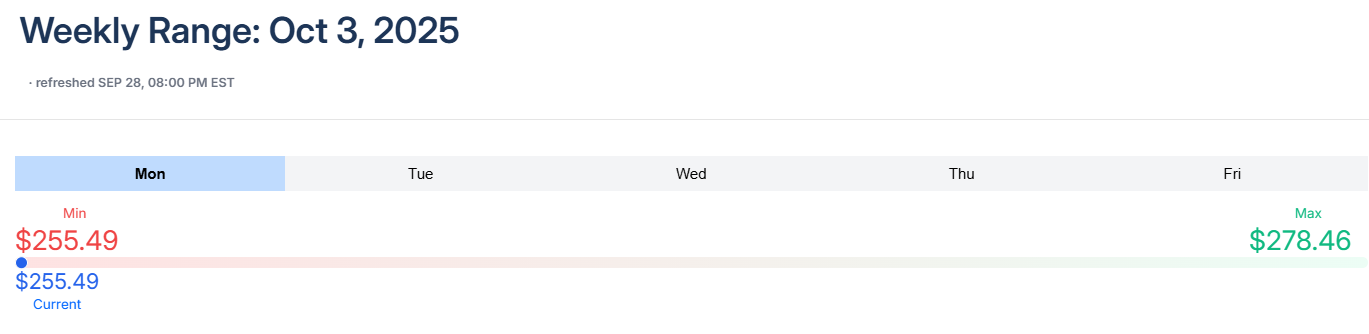
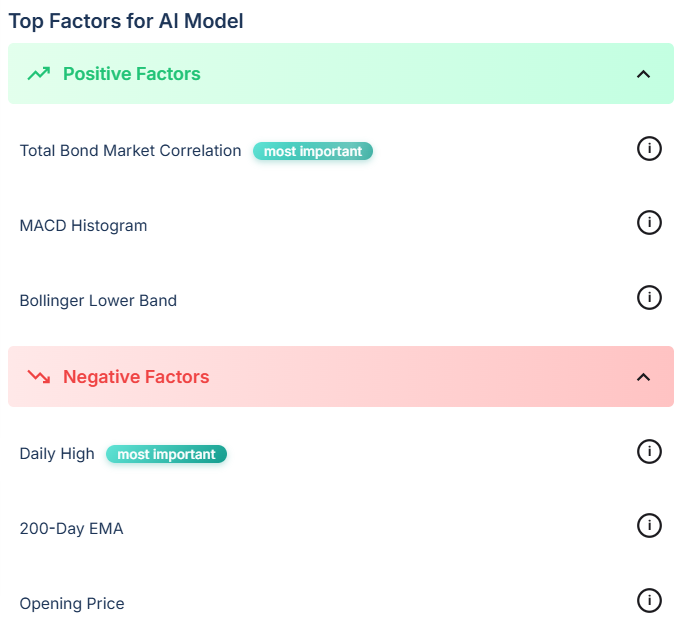
- Interpretability: Does the tool show why it's confident - factors, weights, and drivers? Not a black-box with vague "AI scores".
- Data Breadth: Beyond price/volume, does it include macro (Treasuries, CPI, Fed), news/sentiment, options flow, seasonality, insider trading?
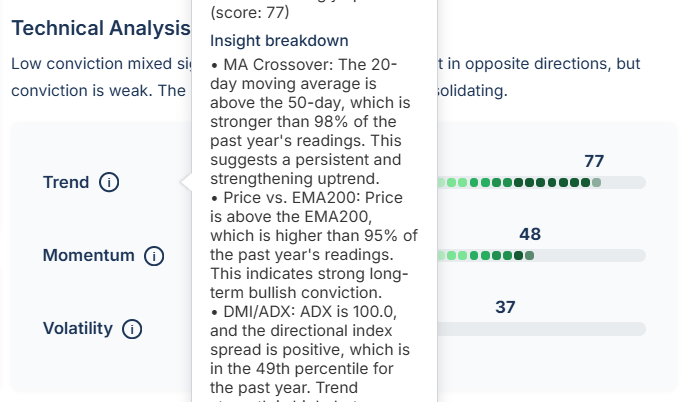
- Technicals Summary: In addition to the AI-model output, you see a 19-indicator summary into a clean Momentum, Trend, Volatility summary (that you can drill down!)
- Use-Case Fit: Day trading vs. swing vs. portfolio tilts. One size never fits all.
Quick List - Top AI Stock Picking Tools
- Danelfin - AI "score" model that ranks stocks across horizons. Learn more: https://danelfin.com
- Kavout - "Kai Score" ML rankings that blend fundamentals and technicals. Learn more: https://www.kavout.com
- Trade Ideas - "Holly" AI engine scanning strategies for active traders. Learn more: https://www.trade-ideas.com
- Tickeron - Marketplace of AI trading bots and scenario picks. Learn more: https://tickeron.com
- TrendSpider - Algorithmic charting, pattern recognition, and backtesting. Learn more: https://trendspider.com
- MarketCrunch AI - Multi-factor, explainable AI with next-day & weekly price targets. Learn more: https://marketcrunch.ai
How do They Stack Up?
Deep Dive - MarketCrunch AI
What it is: An explainable AI engine built to predict next-day and weekly price targets while showing the top drivers behind each call - e.g., options flow, rate regime, seasonal tendencies, or sentiment shocks.
How it works (at a glance):
- Multi-factor inputs: technicals, macro (Treasuries, CPI, Fed data), options, news/sentiment, insider trades, and more.
- Explainability first: Every prediction ships with factor contribution and confidence bands.
- Research-grade context: Compare model vs. buy-and-hold on Sharpe/returns; see when/where it performs best.
Who it's for: Swing and short-term traders who want to move beyond black-box grades and see the why, not just the what.
Example: AAPL
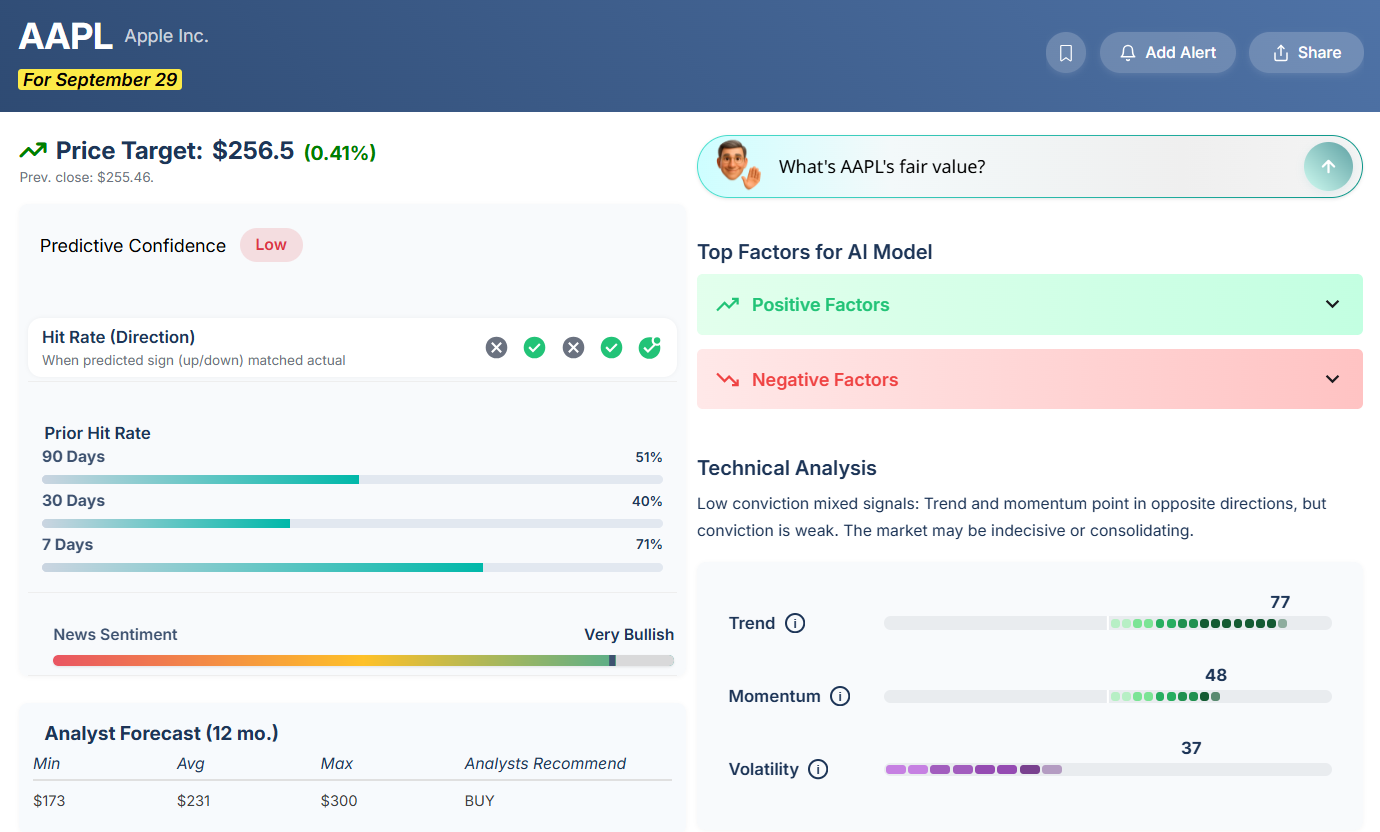
MarketCrunch AI pairs each price target with the factors that drove it - turning a prediction into a research note.
👉 Get tomorrow's price targets today - try MarketCrunch AI free.
How to Choose Based on Your Workflow
- Active day traders: You'll likely favor Trade Ideas for intraday automation.
- Swing traders (days to weeks): MarketCrunch AI for targets + explanations; Danelfin/Kavout if you prefer ranked lists.
- Plug-and-play bot users: Tickeron can match you with prebuilt AIs.
- Chart-first traders: TrendSpider shines for pattern detection and visual backtesting.
If you're constantly asking "why did this signal fire?" then explainability should be non-negotiable. That's where MarketCrunch separates from the pack.
If you found this useful, follow for more practical guides on AI + markets. This is not a financial advice. We're not a broker-dealer.