
In the noisy neighborhood of finance, where headlines are dominated by wild swings in the stock market or crypto millionaires one tweet away from fame or ruin, the bond market often plays the role of the silent, calculating observer. But don't be fooled by its quiet demeanor - it's the deepest, most influential market in the world. And when geopolitics go off-script, say through a full-blown U.S.-China tariff war, it's the bond market that may light the fuse - or absorb the shock.
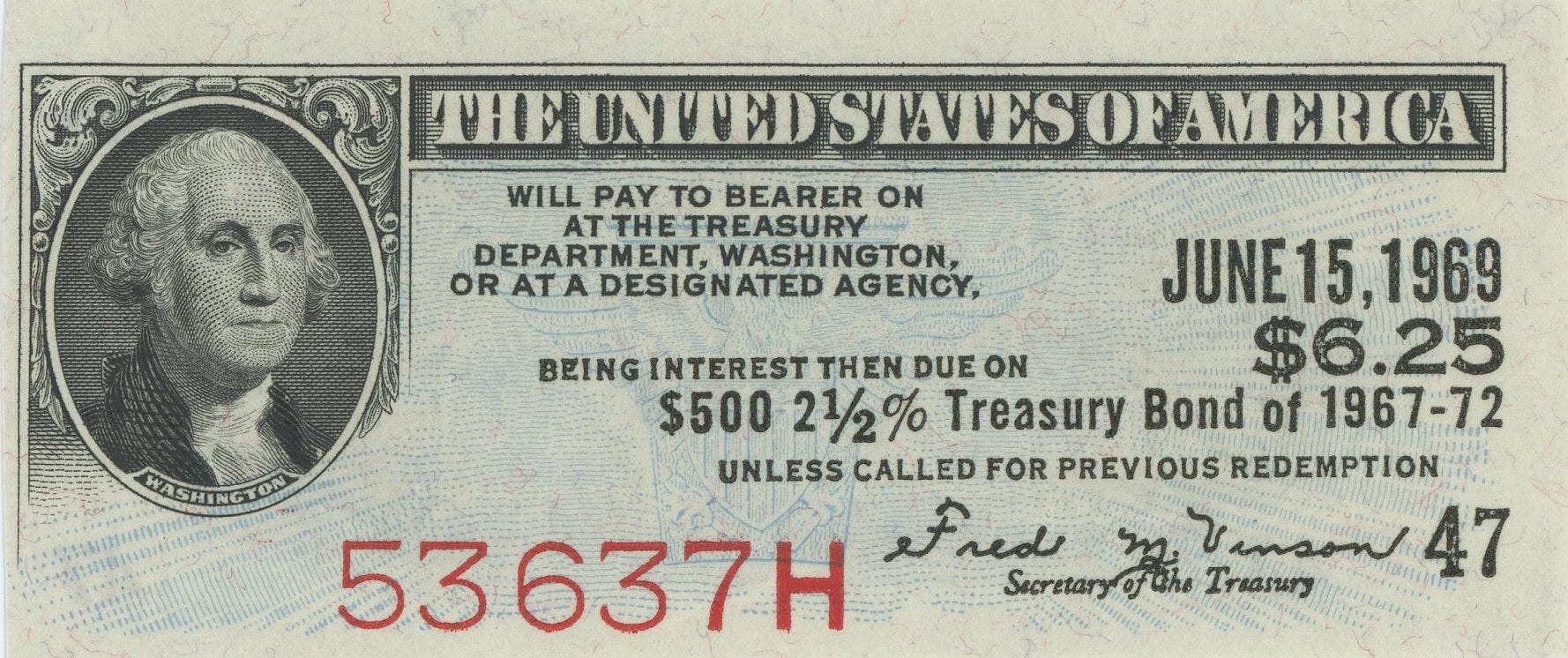
Imagine a loan being sliced up and sold to millions of investors across the world. That's a bond. Governments, municipalities, and corporations all issue bonds to raise money. When you buy one, you're lending money in exchange for periodic interest payments (called coupons) and the promise of getting your principal back later.
But here's the twist: these bonds are traded constantly. Their prices go up and down based on inflation expectations, interest rates, and risk appetite. When bond prices fall, yields (the return you get if you buy the bond now and hold it to maturity) rise — and vice versa.
The U.S. Treasury market, which handles the federal government's debt, is the king of the hill. It's vast, liquid, and viewed as virtually risk-free. That's why Treasury yields are often called the "risk-free rate" in finance. This rate forms the base upon which everything else — mortgages, corporate loans, credit card APRs, and even venture capital hurdle rates — is priced.
Bonds and Stocks: Frenemies in Finance
There's a subtle push-and-pull between the bond and stock markets. They're not exactly enemies, but they often move in opposite directions because they reflect different economic narratives.
If you own stocks, you're banking on growth. If you own bonds, you typically want safety and income. So when economic growth is expected to be strong and inflation low, stocks soar — and bonds, offering relatively low returns, may be less attractive. Investors sell bonds, bond prices fall, yields rise.
But when fears of recession, inflation, or geopolitical risk rise, money flows into bonds. That's called a "flight to safety." It lowers yields and often hits equities, as uncertainty causes investors to reevaluate riskier bets.
Take the COVID-19 panic in March 2020. Stocks plummeted, but 10-year Treasury yields fell to 0.71% as investors scrambled for safe assets (MarketWatch). Or consider the 2022 inflation spike: the Fed raised rates aggressively, pushing bond yields up. That, in turn, caused tech stocks - sensitive to future earnings and rate assumptions - to crater.
How a US-China Tariff War Throws a Wrench Into the Machine
Washington announced a 145% tariff on Chinese imports, Beijing responded in kind with 125% tariff on US goods - essentially a mutual embargo (NBC).
Here's how the dominoes fall in the financial system:
- Inflation Expectations Rise
Tariffs act like taxes. When a 145% tariff is slapped on a Chinese-made smartphone component, U.S. manufacturers pay more - or shift supply chains (which takes time and money). That cost usually gets passed to consumers, pushing up prices.
This cost-push inflation is different from demand-driven inflation. It's not about people spending more - it's about everything costing more. That makes life difficult for the Federal Reserve.
2. The Fed's Tightrope Walk Becomes a Tightrope Sprint
The Federal Reserve, already balancing growth and inflation, now faces a more complicated decision tree. If inflation expectations rise and wage demands follow, the Fed may need to raise interest rates further — even if the economy is slowing due to trade disruptions.
That's exactly what happened in the late 1970s, when oil shocks caused inflation and stagnation simultaneously. Paul Volcker famously hiked rates above 15% to crush inflation — but at the cost of a deep recession.
3. Bond Yields Swing Wildly
Here's where the bond market starts to crackle. Normally, inflation fears lead to higher bond yields. But a trade war can create conflicting signals:
- If investors believe, Fed will raise rates to fight inflation, yields go up.
- But if investors think the trade war will crush growth, they may buy Treasuries for safety, pushing yields down.
This tug-of-war can cause volatility not just in bond prices, but in credit markets more broadly. Companies might face rising borrowing costs even if they're not directly involved in the trade war.
4. Equity Markets React - Badly
Stocks don't like uncertainty — especially when it touches both earnings and interest rates. A tariff war hits companies two ways:
- Input costs rise due to imported materials getting more expensive.
- Sales may decline if retaliatory tariffs reduce global demand for U.S. goods.
Tech and industrials would likely take the first hit. Apple's supply chain is heavily dependent on China. Boeing could lose lucrative Chinese airline orders. Tesla, which sells cars and sources batteries globally, becomes collateral damage.
In short: margins shrink, revenue growth slows, and P/E ratios compress — because higher interest rates mean future earnings are worth less today.
5. The Dollar Dilemma
Typically, the dollar rises in a crisis because it's a global reserve currency. But if a tariff war escalates into a geopolitical rift, some countries (e.g., China) may diversify away from U.S. Treasuries. That would reduce demand for U.S. debt, potentially pushing yields up even as the economy slows.
Sound familiar? In 2022, the U.K. faced a similar issue: markets balked at unfinanced tax cuts, triggering a spike in gilt yields and forcing the Bank of England to intervene. It's a reminder that markets can turn on a dime when credibility is questioned.
Is There Any Upside for the U.S.?
In carefully targeted cases, yes. A surgical tariff regime can work if it aligns with national security and industrial policy goals. Some examples:
- Semiconductors and AI Chips: Restricting Chinese access to advanced U.S.-made chips may slow their military AI ambitions, while subsidizing domestic fabs (like Intel or TSMC Arizona) can foster strategic autonomy.
- Rare Earths and Green Tech: Encouraging local or allied supply chains for key minerals used in batteries and wind turbines can reduce strategic vulnerabilities.
- EVs and Solar Panels: Protecting infant industries - if paired with industrial policy and R&D investment— can spur domestic growth and jobs.
But protectionism without productivity gains leads to stagnation. The 1980s tariffs on Japanese cars helped U.S. automakers — but also led to complacency and quality gaps. The trick is to make tariffs a bridge to innovation, not a moat for inefficiency.
The Final Word
The bond market isn't just where governments go begging for cash. It's the master switch of the modern economy — setting rates, reflecting risk, and forecasting the future.
When tensions flare between the U.S. and China, it's not only the stock market that trembles. The bond market becomes the battlefield where inflation, interest rates, and investor sentiment collide. If handled recklessly, a tariff war can trigger a chain reaction: higher inflation, tighter credit, slower growth — and even a crisis of confidence in U.S. fiscal leadership.
But if applied with precision and paired with long-term investment, limited tariffs could strengthen the U.S. economy in key sectors. The difference lies in execution. And as any bond trader will tell you, it's not just the news that moves markets — it's how credible the story sounds.
— - - - - - - - - - - - - - - - - - - - - - - - - - - -
Written as part of Investment Basics series for MarketCrunchAI.
Get a feel of treasuries (short-term ETF e.g. ISHG, long-term 7–10 yr ETF e.g. IEF) and total bond market ETF (e.g. BND)
This is not a financial advice.